
Cast Iron Rules
This post contains affiliate links. If you make a purchase through these links, I may earn a small commission at no additional cost to you. I only recommend products I truly love and use.
As I seek to replace everyday items with US-Made versions, a category that is top of mind is cookware. Cookware can generally last a long time, but a lifetime? Yes, it seems quality cookware, if maintained well, can last a lifetime - even passed down to future generations. After renovating our kitchen a number of years ago, a few items that accompany a kitchen like peas and carrots weren’t reciprocally upgraded - the cookware. More directly speaking, the pots and pans never moved out and today have quite candidly overstayed their welcome. Not only did they become extended stay guests, the composition was a myriad of brands. Over the years we purchased a mismatching collection - a pot here, a pan there, a wok from who knows where. I blame being young homeowners and not seeing the value of a quality full set of cookware that would last many years. Or maybe it was the cost. Buying a full set of cookware is expensive, if quality and longevity is desired.
It’s also confusing - stainless steel, cast iron, aluminum, ceramic, carbon-steel, glass, non-stick. Our collection has no consistency, from material to origin, it’s a regular old garage sale of cookware. Non-stick is an easy go to - it does what it says and makes for easy cooking and cleanup. When busy young families are strapped for time, the non-stick solution is no doubt appealing. While prices for non-stick vary, affordable options can boost the appeal vs more expensive options that require some TLC. Non-stick pans of yesteryear, often still residing in kitchens today (guilty as of 2 days ago), contain chemicals (PFOA) that when heated to high temperatures release harmful fumes, leading to “Teflon Flu” - a temporary condition bringing fever, chills, headaches, and muscle aches. Today, a less harmful but still considered a “Forever Chemical”, PFAS and PTFE (Teflon) is the standard in non-stick cookware. Current scientific research suggests exposure to these chemicals can lead to numerous adverse health impacts. If you really want to geek out, check out this overviewby the EPA to learn more. Further, the non-stick coating can degrade over time especially by overheating, leading to a shorter lifespan.
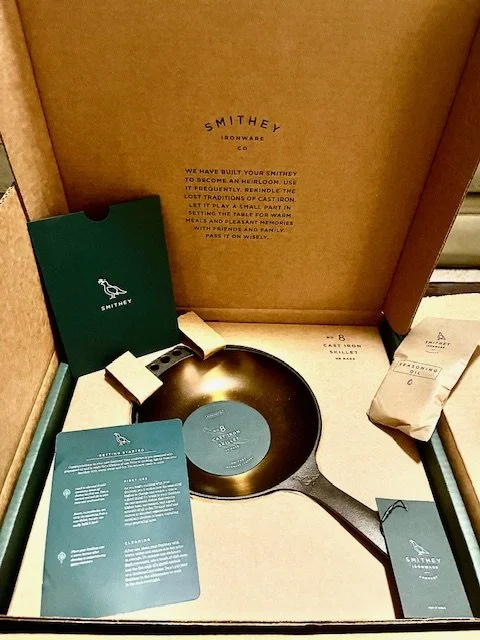
If anything above has you thinking twice and checking your cookware inventory, I’m here to help. Our existing collection after a couple purges, contains two cast iron skillets, a ceramic skillet and a stainless steel stock pot. Happy with the cast iron, I wanted to add a new smaller option to the inventory. After some search, I came across Smithey Ironware, based in Charleston, South Carolina. The No. 8 Chef Skillet caught my eye and is now a proud fixture in our kitchen.
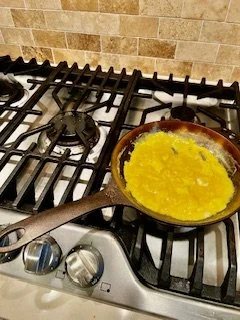
Numerous rounds of eggs later, I can say it was a wise choice.
Helpful Tips:
Look for "PFAS-free," "PFOA-free," and "PTFE-free" claims
If choosing cast iron, be aware it requires some maintenance - but trust me, if care is taken, it will last a life time. Seasoning is key!
Consider replacing a piece at a time vs a whole set to avoid a costly initial purchase
Buy US Made!
Drop a note in the comments below if you have any experience with any materials or plan to join me on the cookware refresh journey!
We may earn a small commission from purchases made through the below link.